|
But I
didn’t just stay in Alaska
that first summer. I finished college and then wandered around the
country for
five years—Massachusetts, Pennsylvania, Idaho,
California—working
as a Naturalist in outdoor education programs. (I had an English Degree
but
these programs hired me anyway.) You know, the kind of program where
you and
your classmates spend a week hiking around during the day, having
campfires at
night, and then sleeping in cabins, all the while trying not to get
eaten by
bears and mountain lions. In my five years as a Naturalist no one got
eaten by
anything. I got bit by an alligator lizard, but that’s another story.
One of the
benefits of working as a Naturalist was the time off. I had a winter
break and
a summer break. One winter I did a sixteen hundred mile solo mountain
bike trip
through the deserts of Nevada, California and Arizona.
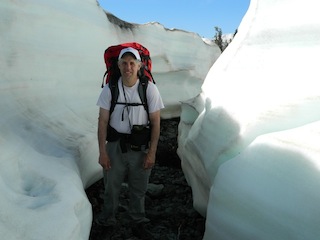
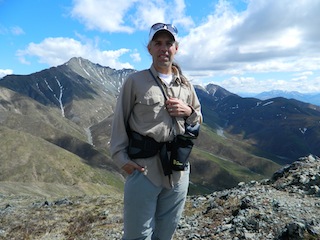
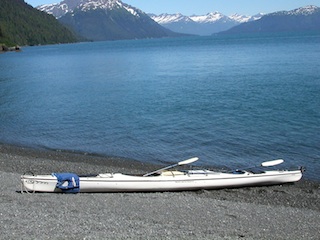
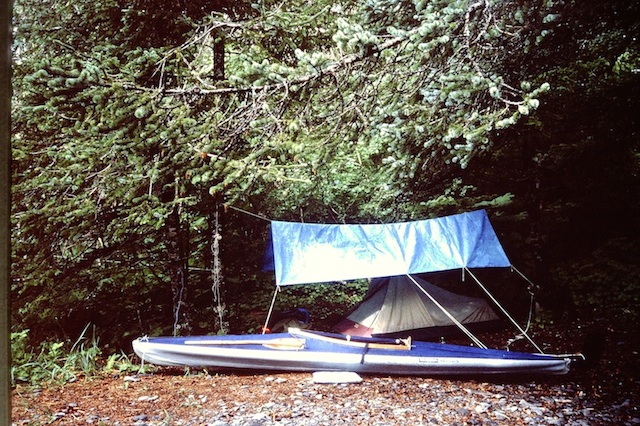
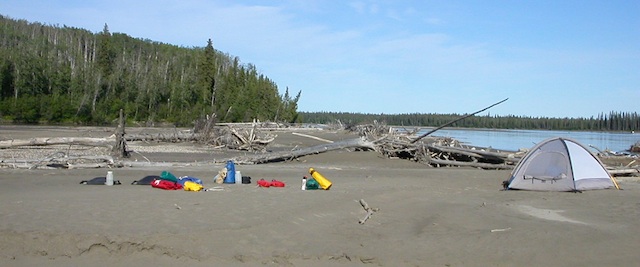
Most summers I headed to Alaska
where I led backpacking trips for teenagers part of the time, and went
sea
kayaking the rest of the time.
Settling
down. Sort-of.
After a
while I got tired of moving around. I wanted a place I could call home.
So, one
summer when I went to Alaska,
I just stayed and got a job teaching English in an Alternative School.
And then I
met my wife, Dana. Well, she wasn’t my wife yet but soon she would be.
She’s a
teacher, too. And she likes sea kayaking and backpacking, too. And
reading and
writing. We are perfect for each other.
As you’ve
probably guessed by now, I don’t spend a lot of time sitting around, or
even
that much time inside. When I was a teacher, I used to ride my bike to
school.
Even in the winter. When the temperature would drop to fifty below
zero, I’d
still ride my bike. It was my daily adventure. My students told me I
was crazy.
Maybe I am a little crazy. I mean, after all, you have to be a little
crazy
just to live in Alaska.
Another
thing I like to do is run marathons. So a few times a week after riding
my bike
home, I’d go out for a training run.
Where I write
When
I
started writing full-time I spent a lot of time sitting. And after a
year or so
my body started to rebel. My back ached. My shoulders collapsed forward
and
stayed that way. And my neck—you don’t even want to know. The physical
therapist
who tried to loosen it up said, this is
the tightest neck I’ve ever worked on. It’s hard as cement. Ouch!
I
didn’t
know writing could be so hazardous. I mean, I’d survived ten foot waves
in my
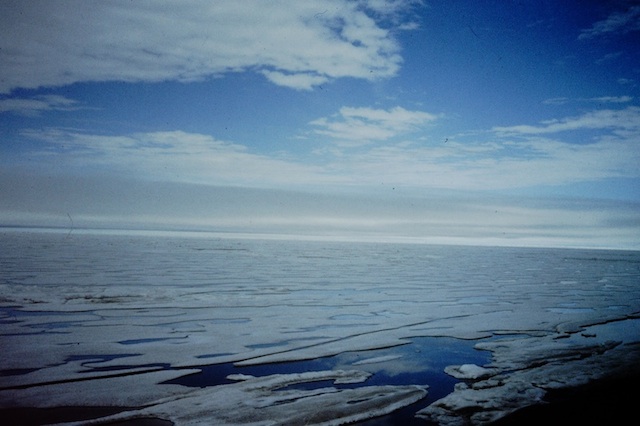
sea kayak in the middle of Prince William Sound, avoided polar bears in
the
Arctic (luckily they were busy feeding on a whale carcass or I may have
ended
up as their lunch), and lost my footing in the mountains and slid forty
feet
down a steep slope. I landed on my face and was a little bruised but
healed up
pretty quickly. But writing—in a chair
for hours and hours on end—was brutal.
I
had a
treadmill collecting dust in a little room upstairs so I built a
desk-top for
it. And now, most of my writing time is also walking time. My back and
my neck
and shoulders are delighted. My friends sometimes ask: “Paul, how many
words
per mile did you average today?”

Some other
things I do
Reading
I
read
lots of books. Mostly young adult fiction but a fair amount of
non-fiction,
too. When I taught school most of my students were reluctant readers so
I read
many very good books just to find a few that my students would connect
with.
And all that reading was the best education I could’ve had as a writer.
So, if
you want to write then read, read, read. Never ever stop reading.
Fishing
Even
though I spent a couple summers up to my neck in fish guts, salmon guts
specifically, I still love to eat salmon. In Alaska you have lots of
opportunities to
catch salmon if you are willing to give it a try. One way to catch
salmon is by
dip netting in the Copper River. You
hold a
big net on a long pole in the river and you wait until a fish swims
into your
net. It’s not as easy as it sounds. The river is full of glacial silt
so you
can’t see below the surface. And the current moves along like a freight
train.
So, it’s all about feeling the ding
in your net and then pulling it up and out before the fish gets away.
Then
you’ve got to wrestle the fish out of the net and club it on the head.
When the
fish are running strong my wife and I can catch thirty salmon in two
hours.
Once she had three fish in her net at the same time. Dip netting is
kind of
like lifting weights nonstop while balancing on a narrow ledge.
Gardening
Produce
travels a long way to get to Alaska
and often it’s not in the greatest shape. I mean, do you like tomatoes
the
consistency of sandy mush? Or carrots that taste like cardboard? Me
neither.
Plus, it takes a lot of energy to ship stuff to Alaska. So, yeah, we have a big
garden. And
a seven foot tall fence to keep out the moose.
Field
Biology
One
summer
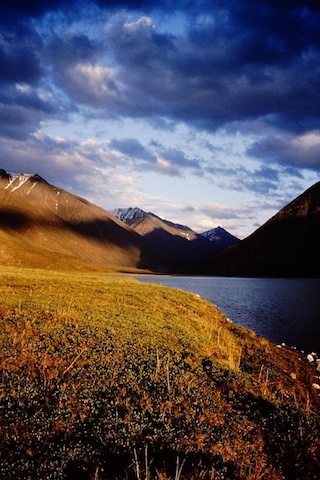
the Fish and Wildlife Service hired me to do stream and lake surveys on
the
remote and roadless Arctic National Wildlife Refuge. I got to fly
around in a
helicopter every day and tell the pilot where to land so my crew and I,
(yes, they
put me in charge), could do our surveys. See, you really can do just
about
anything with an English Degree.
|